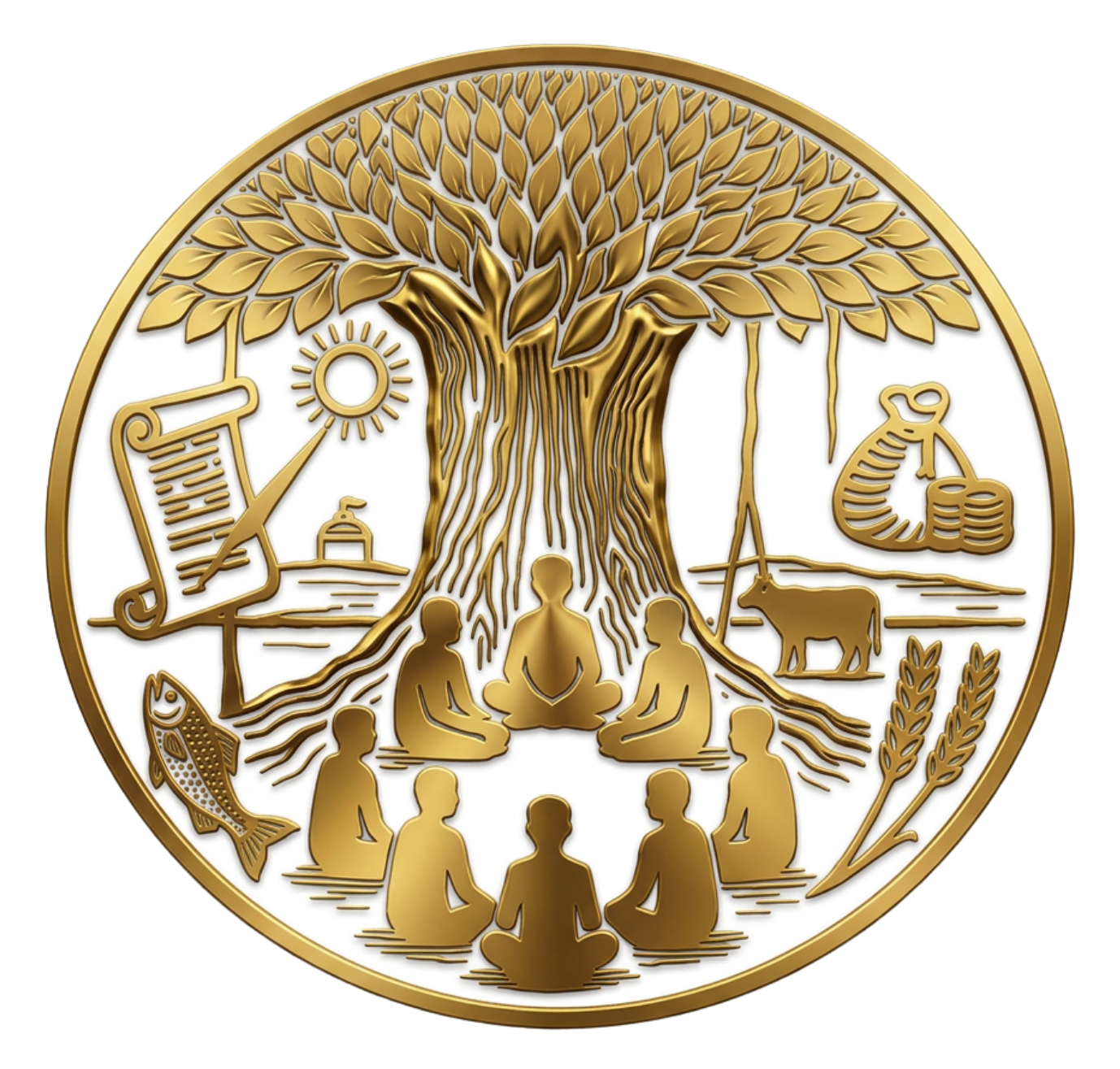
This day – the 16th of September, we remember our pioneers for leaving behind a legacy for the generations.
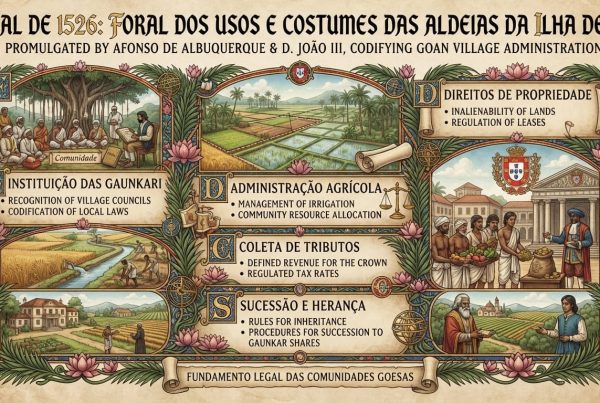
Read the Foral of 1526 in English here
This day – the 16th of September, we remember our pioneers for leaving behind a legacy for the generations.
Read the Foral of 1526 in English here
It began with uncertainty, a desire for establishing security for our very own and a need for realising a dignity which comes from the Highest authority. It led to acknowledgement and mutual respect and understanding, to a marriage of two distant cultures – two perspectives. One of expedition, driven by unwavering faith and another by a need for a transcendence through community. One by an objective sense of morality and the other by diverse ideas and expressions of philosophies, origins, tradition and spirituality. One by a belief in a central authority and another through de-centralised sovereignty. Such were the apparently contrasting beginnings of the New Age in this region of India we dotingly know today as Goa. Though culturally unique in expression and geographically distant from one another, this largely harmonious collaboration between Eastern and Western civilisation – still growing over 450 years – began in a humble region we know as Tiswadi in Goa today and is an example that despite surfacial appearances that localise, universality can be achieved at depth. But how high can authority go?
A wise man once said that Wisdom is the Knowledge of things that never change. There is no other national culture where contemporary wisdom is celebrated more today than in India even by the least of men. Ancient schools of philosophy in Greece and India attempted to arrive at conclusive wisdom. Gemini on Google summarises – “Greek philosophy focussed heavily on rational inquiry, empirical observation, and civic ethics, whereas Indian philosophy centers primarily on spiritual liberation, inner realization, and cosmic interconnectedness. They parallel however on rational inquiries into consciousness, pluralistic views of matter, etc…” and also shared ideas of unchanging supreme Transcendentals namely Truth, Goodness and Beauty and the Knowledge that Divine Wisdom conceives Divine Justice giving Sovereigns Divine Authority.
More than ritualistic religious beliefs, the diversity in Indian culture stems from various and diverse philosophies spread out across this abundant nation. This trait is also evident in the various villages of Goa through their village Deities / Patrons. Another interesting and noticeably uncommon trait among these communities in Goa (compared to many other orthodox cultures in the sub-continent) is a high tolerance to inclusivity and a deeper communal understanding since even before modern literacy and education was made widely accessible.
Necessity is the mother of invention. Whether we care to admit it or not, either civilization needs the other and this pioneering and collaborative approach has birthed a new cultural direction since 1510, that began as regional yet universal in spirit.
We sincerely hope that this 16th of September 2026, as we solemnly commemorate the 500th anniversary of the Foral de Affonso Mexia, we can revisit that possibility and that we may find the freedoms to work for broader and far-sighted ideals that can last beyond our brief individual lifetimes. The trees that are, can only begin growing again when the roots grow deeper.
“… So be wise as serpents and innocent as doves.”
© 2026 www.gaunkary.org